By Priscilla Abbah
Before the world’s first breath, there was a story written not by God, but by an absence of love, spiced with the wickedness and diabolic dominance of patriarchy.
I could tell a thousand stories of tortured women, yet none captures injustice more clearly than that of a girl, Malala Yousafzai, whose desire for education became a crime; why culture normalised a form of cruelty called ‘foot binding’ as a beauty standard for a Chinese girl; and why, in Africa, a girl’s vagina was mutilated to prevent her from being promiscuous. No story can capture why, in mediaeval Europe, Germany and France, women were sold as chattels, could not vote and could not own property.
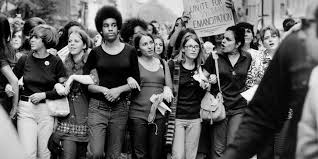
All this and more was the price for being born female. And that bitter price was what brought about feminism. “Feminism is a range of social, political, and ideological movements aimed at establishing, defining and achieving political, economic, personal and social equality of the sexes.”
From the uproar in the 3rd century till date, feminism has significantly shifted global society by securing legal rights, political power, and increased independence for women. Major achievements include women’s suffrage, access to education, reproductive rights, legal protections against workplace discrimination, harmful traditional practices and the recognition of marital rape and domestic violence as crimes.
Globally, in nearly every woman’s heart today, there lies an assurance that was farfetched decades ago, born from that voice of freedom. Unfortunately, that voice that once constituted change had lost its substance.
“I am not a feminist, but I hold certain opinions about women’s equality.” This is what most of us in this room will say.
This unclear position and reluctance to identify as feminists not only reflect the negative image that feminists and feminism hold but also suggest that the actual meaning of feminism may be unclear.
That silent voice that once sang a courageous melody of freedom now rebelliously sings a tune for man hate.
What true feminism is all about has been neglected and unintentionally misinterpreted, as most women just want to ridicule men.
On these grounds, I ask: has modern feminism empowered women more than it has destabilised social and family values?
Critics argue that modern feminism encourages the dismantling of homes, the silencing of men, and the rise of fatherless households. ”I stand here today not to judge these women as they speak from a place of pain, abuse and an unseen, unhealed wound caused by our patriarchal society.
When I say ‘patriarchy’, I do not stereotype men; I loudly call out the women and mothers who, in one way or another, facilitated this abuse. Who circumcises the girl child? Who tells the girl child not to own property before she’s married? Who maltreats the young, barren Iyawo? Who makes the sick girl child work all in the name of no one is going to take care of your husband and children when you are married and sick?
I would ask a question: should modern feminism go beyond the global fundamental shift of legal rights and women’s independence to the healing of unseen wounds and liberation of the mind?
In all, feminism has always been a response to historical inequality.
(And so I’ll say this)
Feminism resembles fire. On the one hand, it warms the cold rooms of inequality; on the other, it threatens to destroy the delicate furniture of tradition. The question is not whether fire is dangerous, but whether we understand how to control it.
And so I ask again, has modern feminism burnt the fragile furniture of social and family values? That’s still a question in motion today.
About the Author


This is beautiful
Thank you for your engagement, Margaret.
Beautiful piece
Thank you