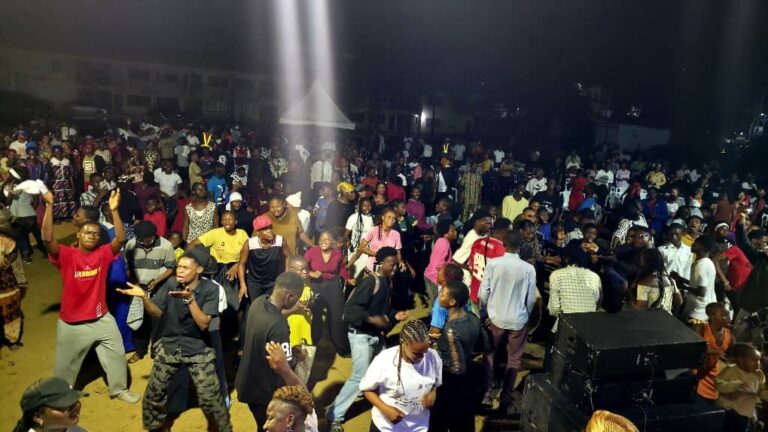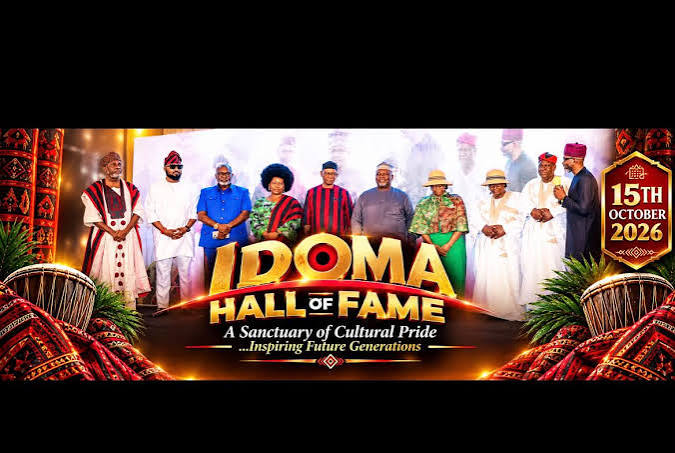
Ufia traditional leaders and politicians at 2025 Joha Day. Source: Benue Day
The Ufia Joha Festival is the biggest and most highly anticipated festivity in Ufia Land. It’s regarded as the most celebrated festival in Ufia land. It is the celebration of the bountiful yam harvest. Before the coming of the Europeans and the popularity of Christian religious festivals such as Easter and Christmas. The biggest celebration in Ufia remains Joha; despite the Christian religion’s infiltration, some people still see Joha as one of the important cultural celebrations of the Ufia people of Utonkon in the Ado Local Government Area of Benue State. It’s more than a colourful gathering; Joha is closely connected to the community’s agricultural heritage, identity and traditions, similar to other Orring tribes of Nigeria.

1. Joha is a new yam festival.
Joha is associated with the harvesting and celebration of the new yam. It represents an important point in the agricultural calendar when the Ufia community celebrates the harvest and gives cultural meaning to the food and their crops. This crop or agricultural festival is passed from one generation to another. And the tradition still, like, maintains its value of the New Yam Celebration despite the modernisation.
2. It is deeply rooted in Ufia culture
The Ufia people are associated with Utonkon in Ado LGA of Benue State, and Ufia is recognised as one of the distinct linguistic and cultural groups within the wider Idoma area. Their festivals serve as an important way of preserving their history and cultural identity. The Ufia New Yam Festival is similar to other cultures, like that other part of Idoma and the Igbos of eastern Nigeria.
3. Joha is a bigger celebration than the RICHI AND RAKENG
The Joha is always celebrated after three market days in a Ufia traditional month, which falls around September after Rakeng and Richi, which will be announced by Olong Nwe Ufia, the grand king of the Ufia kingdom. and does not stand completely alone. Reports on Ufia’s traditional calendar describe a sequence involving Rakange/Rakeng, which stands as a communal cleansing ceremony; Richi, connected with sacrifices and the first new yam harvest; and Joha/Jokah, which is the biggest and loudest of them all, a celebration of the new yam.
Note: Rakeng always fall on the third Eje Market day; Richi falls on third Eje Market day around August in most cases; and Joha falls on fourth market day, called Eve in the month of September in most cases
4. Masquerades, music and dancing are major attractions
Joha is also a cultural spectacle, featuring friendly masquerades, like Eturu, singing, dancing and communal celebration. These performances are more than entertainment—they provide an avenue for younger generations to encounter and learn about Ufia traditions and culture.

5. Joha brings Ufia Politicians and Traditional Leaders Together
Perhaps the most important aspect of Joha is its emphasis on unity and community. The festival brings together sons and daughters of Ufia, community leaders, traditional institutions and visitors to celebrate their shared heritage. The 2025 celebration, for example, attracted dignitaries and community members from within Nigeria and abroad.
6. Storytelling
In Ufia custom, the night before Joha Festival day is dedicated to storytelling across Ufia’s territory. People stay up until midnight listening to elders share generational tales with one another, and everyone pays close attention. Tales about marriages, wars, rivers, and animals—particularly the tortoise and the elephant. Before you say it’s the main Joha day, some of those would make you laugh uncontrollably, but others are highly instructive and infused with cultural values and lessons.
7. Harvest of Yam
Source: Facebook
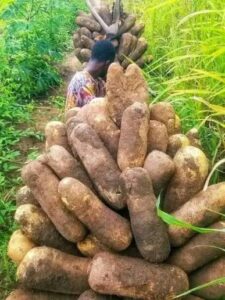
On Joha Day, all of the farmers—especially the men—enter their farms as early as five or six in the morning to harvest as much as they can and give it to their neighbours, in-laws, relatives, parents, and widows from nearby and distant places. This custom is followed throughout the entire Ufia Land-Utonkon. There would be plenty of yam to go round, accompanied by a song like Elemakata Song
Elemakata Song,
- Singer: Elemakata Fiangba
- Response: Elemgbao
- Singer: Koto
- Response: Elemgbao
- Response: Kete
- Response: Elemgbao
- Chorus: Ukolo Kao Ono Uvie Kode Rufuo X5
English translation (A farmer is carrying plenty yams; if you dont have them, come and cut or have some.) Credit: John Echi Oke’s Ufia people of Benue.
8. Food
On Joha Day, food would be abundant. On Joha Day, pounded yam or pounded yam combined with akpu (cassava fufu) are the most popular prepared meals. It works well when combined with beniseed soup, melon-infused ogbono soup, and the well-known egusi soup. Families and in-laws would share a lot of meat. exchanging gifts and sharing meals with neighbours and family. For the celebration, people spend months and weeks making new dresses and purchasing new clothing, which is essential for kids because some of them can’t stop crying.
Credit: Google search, elder testimonies, and John Echi Oke’s Ufia people of Benue.
About the Author