IDOMA HALL OF FAME: WHERE DOES THE FAME END? THE IDOMA HEROES LEFT OUT.
Francis Urrah writes from Lagos.
Why the Idoma Hall of Fame Must Broaden Its Search for Deserving Inductees
The Idoma Hall of Fame (IHOF) was conceived as an initiative rooted in love for the Idoma nation, driven by the vision of Engr. Agaba, Prof. Yakubu Ochefu, and other distinguished Idoma sons and daughters. It represents a commendable effort to recognize, celebrate, and preserve the legacies of individuals whose achievements have contributed to the development, identity, and progress of the Idoma people.
Beyond honoring outstanding achievers, the initiative has the potential to inspire younger generations to embrace creativity, pursue excellence, and aspire to greatness. By celebrating individuals who have distinguished themselves in their respective fields, the Hall of Fame can serve as a lasting reminder that dedication, service, innovation, and commitment to the community deserve recognition.
However, following the publication of the maiden list of inductees, questions emerged among members of the public about the omission of several prominent Idoma personalities whose achievements, many believe, merit consideration. The discussion generated considerable reactions, with some questioning the criteria used in compiling the list and wondering whether the initiative had adequately captured the breadth of Idoma excellence.
Some members of the Central Planning Committee (CPC) reportedly offered responses on Facebook. While these explanations may have provided some clarification, concerns about the individuals left off the list remain a subject of discussion.
The central question, therefore, is not whether the Idoma Hall of Fame is a worthwhile initiative, but whether its selection process can be made sufficiently broad, transparent, and inclusive to reflect the full range of outstanding contributions made by Idoma sons and daughters.
According to the CPC Chairman, Chief Paul Harris Ogbole (SAN), “The Hall of Fame was conceived to preserve the legacy of outstanding Idoma sons and daughters and inspire future generations through excellence and leadership.”
This statement provides an important benchmark against which the initiative’s objectives and selection process can be considered.
If the Hall of Fame is to fulfill this mission, its organizers must continue to examine the scope of their search, the criteria for induction, and the diversity of achievements represented on the list. Excellence exists across numerous fields, including education, public service, business, science, agriculture, the arts, traditional institutions, sports, community development, and cultural preservation.
A comprehensive Hall of Fame should strive to recognize deserving individuals across these fields while applying clear and consistent standards to every candidate.
As the Idoma community looks forward to the maiden edition of this landmark initiative, expected to take place in Abuja on October 15, there is an opportunity for the organizers to build public confidence and strengthen the institution’s long-term credibility.
Subsequent editions could benefit from a more extensive nomination process, wider consultations with communities and professional bodies, and clearly published eligibility criteria. Such measures would help ensure that deserving individuals are not overlooked simply because their achievements are less visible or their contributions have received less public attention.
Ultimately, the Idoma Hall of Fame should be more than a list of celebrated names. It should become a credible record of the people whose work, sacrifices, innovations, and leadership have helped shape the Idoma nation and contributed to society at large.
The question remains: If the Idoma Hall of Fame is established to celebrate outstanding Idoma achievers, how far should its search extend to ensure that no deserving hero is forgotten?
The answer lies in a commitment to fairness, thorough research, and an inclusive recognition process that honors achievement wherever it is found.
SOME PROMINENT ADO SONS WHOSE NAMES DESERVE FURTHER CONSIDERATION FOR THE IDOMA HALL OF FAME
1.
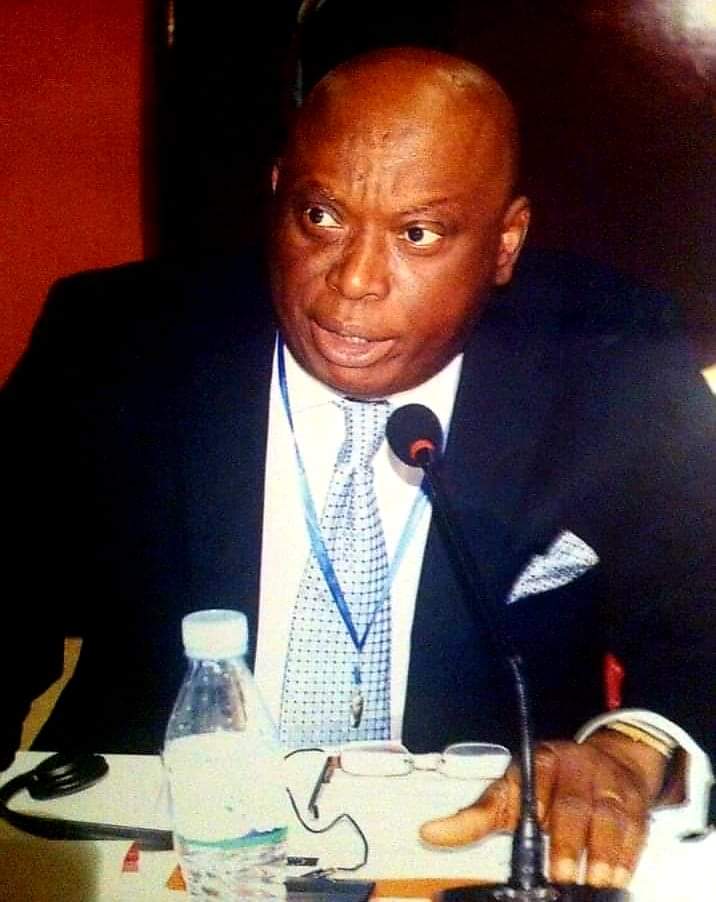
Barr. Simon Chuzi Egede (MON): A Distinguished Legal Career in Public Service
Barrister Simon Chuzi Egede (MON) is a retired Solicitor-General of Benue State and former Permanent Secretary of the Benue State Ministry of Justice. Over the course of his career, he served in various legal, administrative, and public-sector positions at both state and federal levels, culminating in his appointment as Solicitor-General and Permanent Secretary in June 2020.
An accomplished legal practitioner and statesman, Barr. Egede built a career spanning several decades, during which he contributed to legal administration, public prosecution, civil litigation, and the fight against human trafficking in Nigeria.
National Recognition and Service at NAPTIP
One of the notable highlights of Barr. Egede’s career was his appointment as Executive Secretary of the National Agency for the Prohibition of Trafficking in Persons (NAPTIP), a position he held from 2009 to 2011 during the administration of President Goodluck Ebele Jonathan.
In recognition of his service, he was conferred with the national honor of Member of the Order of the Niger (MON). His tenure at NAPTIP formed an important chapter in his public service career, placing him at the forefront of Nigeria’s institutional efforts to combat human trafficking.
Following his departure from NAPTIP, Barr. Egede continued his public service at the federal level. From April 2012 to March 2013, he served briefly as Legal Adviser at the Code of Conduct Bureau in Abuja. Between May and October 2013, he also served as Acting Director of Public Prosecutions of the Federation (DPPF) at the Federal Ministry of Justice, where he handled matters involving inmates who had remained in custody awaiting trial for extended periods.
His federal service also included appointments as Senior Special Assistant to two Attorneys-General of the Federation and Ministers of Justice: Chief Mike Kaase Aondaka, between 2007 and 2009, and Bello Adoke, between 2013 and 2015.
Years of Service to Benue State
Before and after his federal assignments, Barr. Egede devoted substantial years to the Benue State Government, serving in legal and administrative capacities.
His career in the state public service began with his appointment as Secretary and Legal Adviser to Radio Benue, Makurdi, where he served from October 1991 to July 1996. During this period, he also served as acting general manager of the broadcasting organization between 1994 and 1996.
He subsequently moved to the Benue State Ministry of Justice, where he served as Director of Civil Litigation for approximately 15 years and six months, from January 2005 to June 2020. In that capacity, he was involved in the state’s civil litigation responsibilities and legal affairs.
In June 2020, Barr. Egede attained another significant milestone in his career when he was appointed Solicitor-General and Permanent Secretary of the Benue State Ministry of Justice. He occupied the position for approximately three years and five months before proceeding on compulsory retirement in 2023, according to the career timeline provided.
A Career Defined by Legal and Administrative Experience
Barr. Simon Chuzi Egede’s professional journey reflects extensive experience across state and federal institutions. From broadcasting administration and civil litigation to public prosecution, legal advisory services, and the leadership of a national anti-trafficking agency, his career encompassed a broad range of responsibilities.
His service at the Benue State Ministry of Justice, the Federal Ministry of Justice, the Code of Conduct Bureau, and NAPTIP forms the central record of his contributions to public administration and the legal profession.
With his national honor of MON and years of service in various public offices, Barr. Egede’s career provides a record of sustained involvement in Nigeria’s legal and administrative institutions.
2.
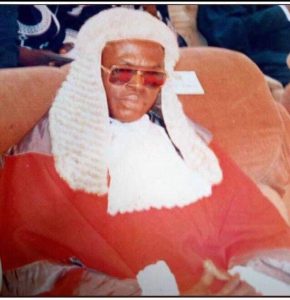
Justice George Idenyi Uloko (OON): The Idoma Legal Icon Who Shaped Plateau State’s Judiciary
From legal drafting and public administration to the highest judicial office in Plateau State, the late Justice George Idenyi Uloko built a legacy of judicial leadership, mentorship, integrity, and service that extended beyond his home state.
The late Honourable Justice George Idenyi Uloko (OON) was a distinguished Nigerian jurist, legal administrator, mentor, and community leader whose career left a lasting imprint on the judiciary and public service. A proud son of Idoma land in Benue State, he rose through the ranks of the legal profession to become Chief Judge of Plateau State, a position he held for approximately 19 years before retiring on December 30, 2002.
Beyond the judicial bench, Justice Uloko served as Attorney-General and Commissioner for Justice in Plateau State and later as Chief Commissioner of the Nigerian Public Complaints Commission. His professional journey reflected a combination of legal expertise, administrative experience, and commitment to public service.
Widely remembered for his contributions to judicial development, he mentored younger legal practitioners, influenced the careers of numerous judges, and participated in shaping the institutional development of Plateau State’s judiciary. His life story remains an important chapter in the history of legal service in Nigeria.
Early Life and Educational Foundation
Justice George Idenyi Uloko was born on April 23, 1941, into the family of Mr. and Mrs. Ada Uloko in Ukwonyo, Utonkon, in present-day Ado Local Government Area of Benue State. He was a member of the Idoma ethnic group and maintained a strong connection to his cultural roots and community.
His educational journey began at St. Paul’s Catholic School, Utonkon, where he studied from 1949 to 1954. The institution was an important center of early Catholic education in the area and contributed to the development of formal education in Idoma Land.
He subsequently continued his education, obtaining his First School Leaving Certificate before proceeding to Mount St. Michael’s Secondary School, Aliade, where he earned the West African School Certificate.
Driven by an enduring desire for knowledge, Uloko proceeded to St. John’s College, Kaduna, in 1963, where he obtained the Higher School Certificate (HSC). His academic progression prepared him for the demanding intellectual and professional requirements of a career in law.
In 1965, he gained admission to Ahmadu Bello University, Zaria, to study law. He graduated with an LL.B. (Honours) degree in 1968 and subsequently attended the Nigerian Law School in Lagos, where he obtained his Barrister-at-Law qualification in 1969.
These academic achievements laid the foundation for a career that would span legal drafting, government administration, private legal practice, and judicial leadership.
A Career Rooted in Legal Excellence
Following his university education, Uloko entered public service under the then Benue-Plateau State Government. He was employed as a pupil state counsel on July 29, 1968, beginning a professional journey that would take him through several important legal and administrative assignments.
Recognizing the importance of specialized legal expertise, the government sent him to Kaduna in 1972 for training in legal drafting. That same year, he was assigned to serve as legal adviser to the Central Water Transportation Company in Onitsha, an organization jointly owned by six state governments, according to the account of his career.
His professional development continued in 1973 and 1974, when he undertook further training in legal drafting in London. These opportunities strengthened his knowledge of legislative and legal documentation, skills that would become valuable throughout his career.
Following the creation of Benue State in 1976, Uloko was posted to Makurdi, where he served as Permanent Secretary and Solicitor-General. His responsibilities placed him at the center of legal administration during an important period in the development of the newly established state.
Between 1977 and 1978, he was sponsored to attend an Advanced Administrative Officer’s Course at the University of Pittsburgh in the United States. The program broadened his administrative knowledge and complemented his legal training.
His combination of legal drafting expertise and public administration experience distinguished him as a legal professional capable of handling complex institutional responsibilities.
From Private Practice to Plateau State Attorney-General
In 1980, Uloko left public service and began private legal practice. His departure from government did not mark the end of his involvement in public affairs. Instead, it preceded another significant chapter in his professional journey.
In April 1984, the Plateau State Government appointed him Attorney-General and Commissioner for Justice. The appointment reflected the value placed on his legal experience and administrative background.
As the state’s chief law officer, he assumed responsibilities at a time when effective legal administration was essential to the operation of government and the development of public institutions.
His tenure in the Ministry of Justice was associated with a strong emphasis on leadership, discipline and institutional development. His experience in legal drafting and government administration provided a foundation for his work in the ministry.
Justice Uloko’s transition from private practice to the position of Attorney-General demonstrated the breadth of his professional experience and prepared him for the judicial leadership role that followed.
Nineteen Years at the Helm of Plateau State Judiciary
In 1985, Uloko’s career reached another defining milestone when he was appointed Chief Judge of Plateau State. He assumed office in May of that year and remained in the position until his retirement on December 30, 2002.
His tenure of approximately 17 years and seven months, based on these dates, made him a long-serving head of the state’s judiciary. Some accounts describe his tenure as 19 years, but the exact duration should be reconciled with the official appointment and retirement records before publication.
As head of the judiciary, Justice Uloko occupied a position of considerable responsibility in the administration of justice and the development of judicial institutions in Plateau State.
His legacy is particularly associated with judicial mentorship and the advancement of legal professionals. He was remembered as a charismatic judge whose experience and approach to legal practice influenced younger colleagues. Many legal practitioners who benefited from his guidance regarded him as an important source of professional inspiration.
His contributions also included supporting the appointment and development of indigenous judicial officers in Plateau State. Such efforts formed part of the broader evolution of the state’s judiciary, including the institutional changes that accompanied the creation of Nasarawa State in 1996.
Justice Uloko’s influence was therefore not confined to the cases he handled or the years he spent on the bench. It also extended to the professionals he mentored and the judicial institutions in which they served.
A Judicial Mentor and Institutional Builder
One of the most enduring aspects of Justice Uloko’s career was his role in nurturing legal talent. He was regarded as a judge who understood that the strength of the judiciary depended not only on its institutions but also on the preparation, discipline and integrity of the people working within them.
His extensive background in legal drafting, civil administration and public prosecution gave him a broad understanding of the justice system. These experiences helped shape his approach to judicial leadership and administration.
His time in the Ministry of Justice and on the judicial bench also placed him in a position to contribute to the development of legal institutions in Plateau State.
To colleagues and younger legal practitioners, his career offered an example of professional progression built on education, experience and service. His influence continued through the judges and legal professionals who learned from his example.
National Recognition and Appointment to the Public Complaints Commission
In recognition of his contributions to public service and the legal profession, Justice Uloko received the national honour of Officer of the Order of the Niger (OON).
The honour recognised his service to Nigeria and formed part of the public recognition of his professional career.
On February 23, 2012, he was appointed Chief Commissioner of the Nigerian Public Complaints Commission by the Federal Government during the administration of President Goodluck Ebele Jonathan.
The Public Complaints Commission is mandated to investigate complaints concerning administrative actions and alleged injustices involving public institutions and other organisations within its jurisdiction. The appointment brought Justice Uloko’s experience in law and public administration to a national institution concerned with accountability and the handling of citizens’ grievances.
His appointment represented another chapter in a career that had already encompassed state-level legal administration, judicial leadership and public service.
Retirement, Faith and Community Service
After retiring from the Plateau State judiciary in December 2002, Justice Uloko returned to his hometown of Utonkon in Benue State.
Retirement did not end his engagement with society. He continued to devote himself to community service and evangelism, reflecting the importance of Christian faith in his later years.
He was remembered as a devout Christian whose religious convictions informed his personal life and community engagement. His return to his roots also reflected his enduring connection to the people and community from which he came.
For a man who had spent decades serving in government and the judiciary, this period represented a transition from formal public office to a more personal expression of service through faith and community involvement.
His Final Days and Passing
While serving as Chief Commissioner of the Public Complaints Commission, Justice Uloko reportedly took ill. He died on June 16, 2016, in Makurdi, Benue State, at the age of 75.
His death marked the end of a career that had taken him from a young law graduate entering public service to one of the most senior judicial figures associated with Plateau State.
His professional journey encompassed legal drafting, state administration, private practice, service as Attorney-General and Commissioner for Justice, nearly two decades of judicial leadership according to commonly cited accounts, and a final national appointment at the Public Complaints Commission.
A Legacy Beyond the Bench
The story of the late Justice George Idenyi Uloko is one of professional development, public responsibility and a continuing commitment to service. From his early education in Utonkon to his legal training at Ahmadu Bello University and the Nigerian Law School, his journey reflected a sustained pursuit of knowledge and professional advancement.
His work in Benue State, his leadership in Plateau State’s Ministry of Justice and judiciary, and his appointment to the Public Complaints Commission placed him at different points in Nigeria’s legal and administrative history.
For the Idoma people of Benue State, Justice Uloko remains a notable figure whose career carried his professional influence beyond his place of origin. For the legal community, his life offers a story of judicial leadership, mentorship and service across several institutions.
Ultimately, his legacy rests not only on the offices he occupied but also on the legal professionals he influenced, the institutions in which he served and the example of a life dedicated to law, public administration, faith and community engagement.
Justice George Idenyi Uloko (OON) will be remembered as a jurist whose professional journey connected the aspirations of his community with the wider responsibilities of public service in Nigeria.
Editorial note: Before publication, please verify the dates of his appointment as Chief Judge, the stated 19-year tenure, the official spelling of his middle name (Idenyi or Udenyi), and the circumstances of his OON conferment and 2012 appointment. The article uses the dates supplied in your draft but avoids presenting the conflicting tenure calculation as settled fact.
3. 
Ambassador Kenneth Okeh: A Career in Diplomacy and International Service
Ambassador Kenneth Okeh is a retired Nigerian diplomat who served in the Ministry of Foreign Affairs before his appointment to represent Nigeria in the United Kingdom.
Throughout his diplomatic career, Ambassador Okeh contributed to Nigeria’s foreign relations and diplomatic engagements. His service in the Ministry of Foreign Affairs provided the foundation for his subsequent assignment to the United Kingdom, where he represented Nigeria in an important diplomatic capacity.
Following his retirement from active diplomatic service, Ambassador Okeh settled in Manchester, United Kingdom, where he currently lives with his family.
His career reflects a life of service in diplomacy and international relations, representing Nigeria beyond its borders and contributing to the country’s engagement with the international community.

If the Idoma Hall of Fame truly intends to live up to its name and the ideals it represents, it must broaden its search, look beyond its current list, and recognise more deserving indigenes whose outstanding contributions and achievements have made a lasting impact on the Idoma nation and beyond.
About the Author