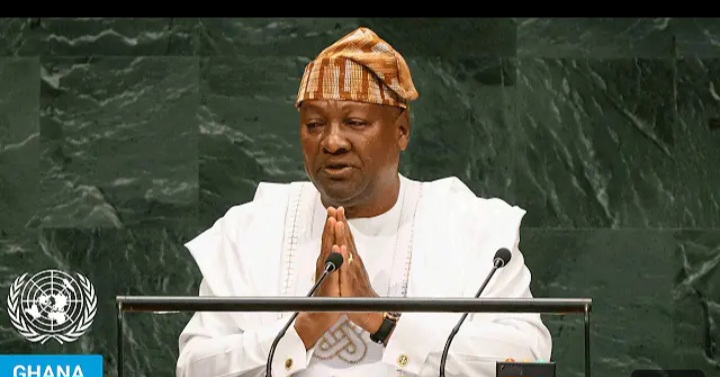
NEW YORK — Ghana’s President, John Dramani Mahama, has used the global platform of the 81st United Nations General Assembly to make a strong case for international cooperation, sustainable development and greater collective action in confronting the challenges facing the world.
Mahama addressed the General Debate of the UN General Assembly in New York on September 24, 2026, joining world leaders gathered for the high-level week of the 81st session.
The Ghanaian president’s appearance came at a time when the international community is confronting multiple pressures, including conflicts, economic difficulties, inequality, development challenges and growing questions about the effectiveness of existing global institutions.
Against that backdrop, Mahama presented Ghana’s perspective on the need for countries to work together rather than retreat into isolation.
His message placed emphasis on cooperation, resilience and the pursuit of development opportunities, particularly for countries of the Global South.
A Call for Collective Action
Mahama has repeatedly used his engagements around the UN General Assembly to argue that global disruption should also be seen as an opportunity to rethink how countries cooperate and create opportunities for their citizens.
At a presidential roundtable in New York earlier in the UNGA week, he said disruption and uncertainty could generate new ideas and partnerships, while stressing the need to create jobs, improve public services, develop infrastructure and expand opportunities for young people.
That message formed part of a broader diplomatic agenda as Ghana participated in discussions on the future of international development and global governance.
Ghana’s Voice on the World Stage
For Ghana, Mahama’s appearance at the General Assembly also provided an opportunity to project the country’s position on issues extending beyond its borders.
The 2026 UN General Assembly has been dominated by debates over international cooperation, reform of global institutions, development financing and Africa’s place in global decision-making. African leaders have renewed calls for reforms that would give the continent a stronger voice in international institutions, including the UN Security Council.
Mahama’s participation therefore came amid a wider African push for a global system that responds more effectively to the concerns of developing countries.
Beyond Borders
The central theme emerging from Mahama’s UN engagements was the importance of countries finding common ground despite their differences.
His message was particularly relevant to a world facing challenges that increasingly cross national boundaries—from economic instability and development pressures to climate-related threats and geopolitical tensions.
The United Nations itself has framed the 2026 high-level week around revitalising global cooperation and collective action for peace, dignity and equality.
As Mahama concluded his appearance at the General Assembly, Ghana had once again placed its voice within one of the world’s most important diplomatic forums.
His address reinforced a message that international challenges cannot be solved by individual nations acting alone: cooperation, dialogue and shared responsibility remain central to efforts to build a more peaceful and sustainable global future.
About the Author